The Billion-Dollar Shipwreck and the Ghosts of the Spanish Empire
Crown · 2026 · 384 pages
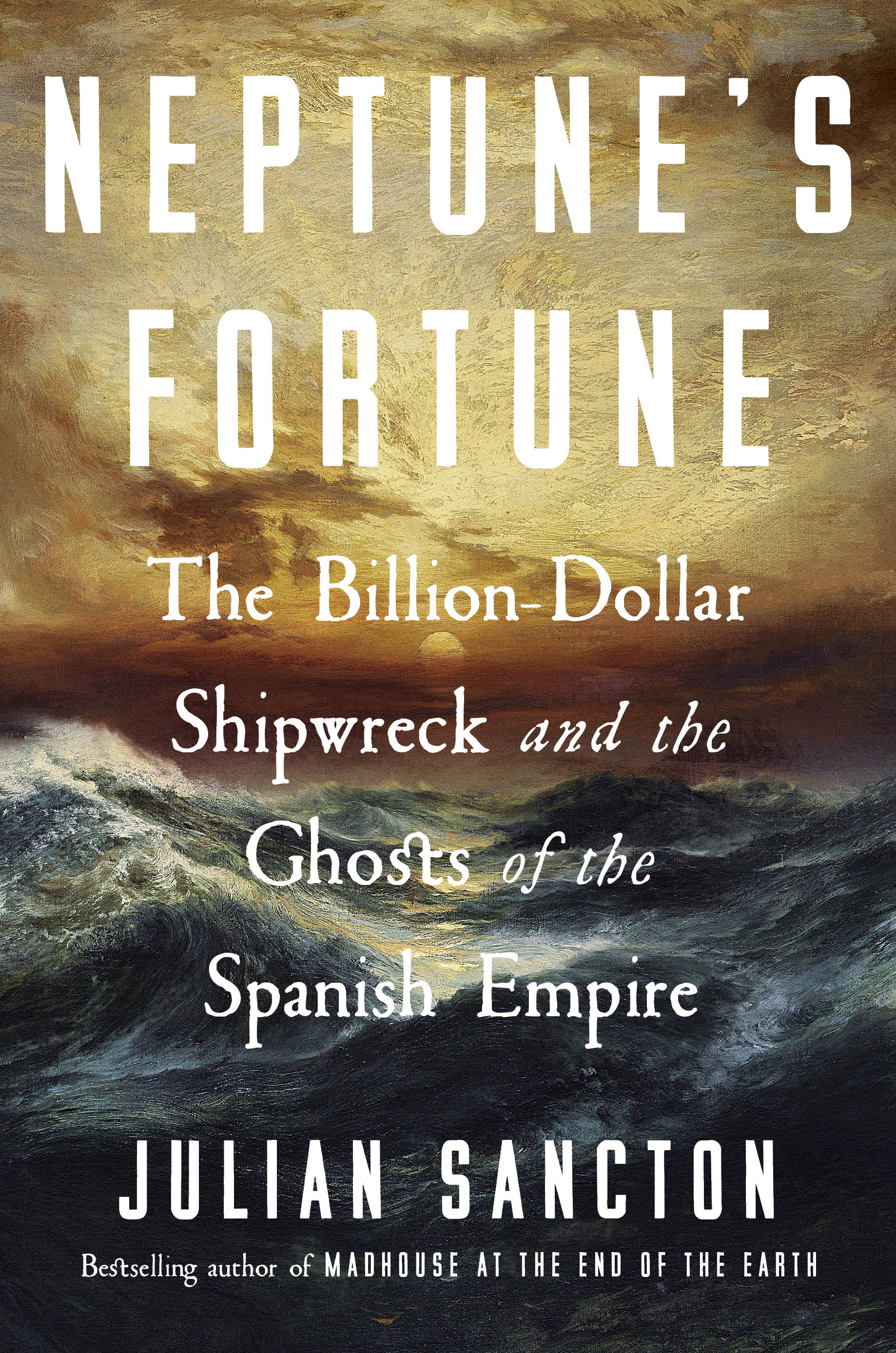
Roger Dooley wasn't looking for the San José. But an accidental discovery in the dusty stacks of a Spanish archive led him to the story of a lifetime, the tale of a great eighteenth-century treasure ship loaded with riches from the New World and destined for Spain. But that ship, the galleon San José, met a darker fate. It was drawn into a pitched battle with British ships of war off the coast of Cartagena, and when the smoke cleared, the San José and its bounty had disappeared into the ocean, its coordinates lost to time.
Though a diver at heart, Dooley was an unlikely candidate to find the San José. He had little in the way of serious credentials, yet his tenacity and single-minded devotion to finding and excavating the ship powered him across four decades, even as he became a man in exile from the country of his birth. As Dooley jousted with famous treasure hunters and well-funded competitors, he slowly homed in on a patch of sea that might contain a three-hundred-year-old shipwreck—or nothing at all.
Neptune's Fortune is a thrilling adventure, taking readers from great naval battles on the high seas to the sun-soaked shores that nurtured history's most notorious treasure hunters, to the archives that held the secret keys to lost fortune on the ocean floor.
Praise
"Splendid . . . Sancton is an expert guide through eighteenth-century European geopolitics [and] modern marine archaeology."
"Roaring with excitement, Neptune's Fortune is a deeply reported adventure, a study in obsession, and a thoroughly engrossing read. Sancton writes in the fine tradition of great narrative nonfiction that transports the reader into private worlds and into marvelous larger-than-life characters."
"[A] thrilling maritime saga . . . technically complex [and] nail-biting . . . [Neptune's Fortune] is a rollicking historical mystery and a beguiling human drama rolled into one."
"[G]ripping. . . . Sancton navigates the fraught tensions among archaeologists, governments, private salvors, and Indigenous groups with nuance and clarity. This is more than a treasure-hunt tale; it's also a compelling examination of history, ethics, and obsession beneath the waves."
"Sancton is a masterful storyteller, and he has struck gold—pun intended—with Neptune's Fortune. Through extraordinary research across three continents and with a journalist's eye for the telling detail, he has penned a rollicking tale of buccaneers, shady treasure hunters, and sea battles both past and present. Readers are in for a rare treat."
"[R]iveting . . . a tale worthy of Indiana Jones himself."
"Neptune's Fortune is a wonderful book, full of heroism, greed, piracy, sunken treasure, and adventure on the high seas. A wild, incredible story from beginning to end, with a central character straight out of Hemingway, it's even more remarkable because it's true."
"Neptune's Fortune is about treasure and the subculture of treasure seekers, but more importantly it reminds us of the deeper and more satisfying riches that come embedded within a splendid historical tale that's been researched meticulously and told exceptionally well."
"Neptune's Fortune is a real-life drama, a maritime riddle, a swashbuckling adventure, and, above all, a riveting tale."
"A rousing historical treasure hunt."
"[A] riveting, nonfiction tale of sunken treasure worth unimaginable sums that reads like fiction."
The Belgica's Journey Into the Dark Antarctic Night
Crown · 2021 · 384 pages A New York Times bestseller
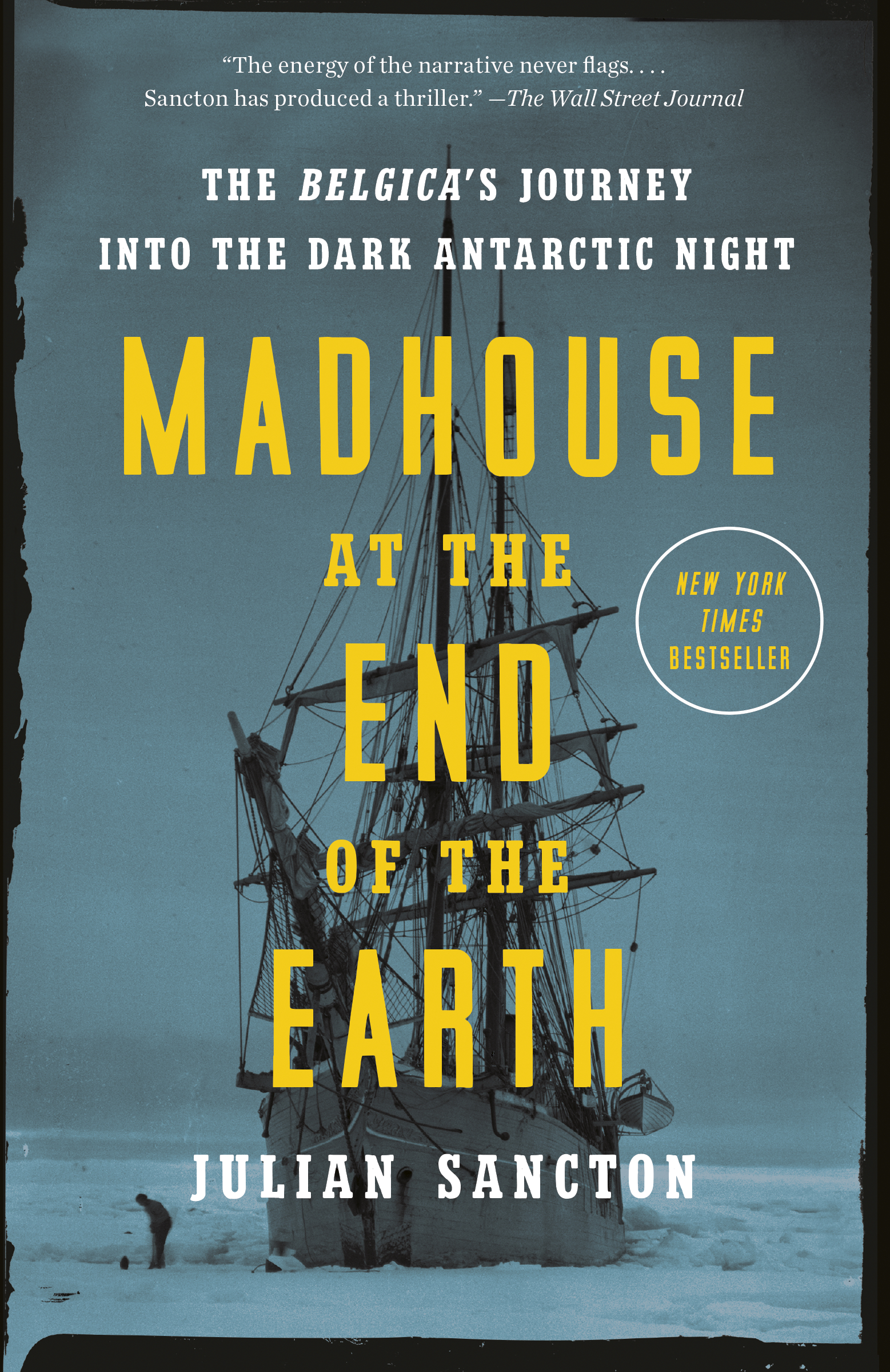
In August 1897, the young Belgian commandant Adrien de Gerlache set sail for a three-year expedition aboard the good ship Belgica with dreams of glory. His destination was the uncharted end of the earth: the icy continent of Antarctica.
But de Gerlache's plans to be first to the magnetic South Pole would swiftly go awry. After a series of costly setbacks, the commandant faced two bad options: turn back in defeat and spare his men the devastating Antarctic winter, or recklessly chase fame by sailing deeper into the freezing waters. De Gerlache sailed on, and soon the Belgica was stuck fast in the icy hold of the Bellingshausen Sea. When the sun set on the magnificent polar landscape one last time, the ship's occupants were condemned to months of endless night. In the darkness, plagued by a mysterious illness and besieged by monotony, they descended into madness.
In Madhouse at the End of the Earth, Julian Sancton unfolds an epic story of adventure and horror for the ages. As the Belgica's men teetered on the brink, de Gerlache relied increasingly on two young officers whose friendship had blossomed in captivity: the expedition's lone American, Dr. Frederick Cook—half genius, half con man—whose later infamy would overshadow his brilliance on the Belgica; and the ship's first mate, soon-to-be legendary Roald Amundsen, even in his youth the storybook picture of a sailor. Together, they would plan a last-ditch, nearly certain-to-fail escape from the ice—one that would either etch their names in history or doom them to a terrible fate at the ocean's bottom.
Drawing on the diaries and journals of the Belgica's crew and with exclusive access to the ship's logbook, Sancton brings novelistic flair to a story of human extremes, one so remarkable that even today NASA studies it for research on isolation for future missions to Mars. Equal parts maritime thriller and gothic horror, Madhouse at the End of the Earth is an unforgettable journey into the deep.
Praise
"A grade-A classic."
"A vivid horror story . . . thrillingly recounted."
"As soon as you finish, you want to read it again."
"Madhouse at the End of the Earth [is an] exquisitely researched and deeply engrossing account of the Belgica's disastrous Antarctic expedition. Sancton uses . . . an extraordinary treasure trove . . . to tease out the personalities and fears and rivalries of his subjects [in] his increasingly harrowing descriptions of life on the Belgica."
"An extraordinary tale of ambition, folly, heroism and survival, superbly told by Julian Sancton, who has rescued the Belgica's story from relative obscurity and brought it to magnificent life . . . [a] splendid, beautifully written book."
"I started reading Madhouse at the End of the Earth . . . and I couldn't stop. [It] reads like an adventure novel [and] is so detailed you can almost smell and taste it."
"Locked down, I craved perilous adventure. Julian Sancton's Madhouse at the End of the Earth delivered. The Belgica's 1897 South Pole expedition is pure horror. Clueless captain, rat-infested ship frozen into the ice, scurvy, darkness, hunger, insanity . . . terrific stuff."
"At once a riveting survival tale and a terrifying psychological thriller, Madhouse at the End of the Earth is a mesmerizing, unputdownable read. It deserves a place beside Alfred Lansing's immortal classic Endurance."
"Madhouse is that rare nonfiction gem—an obscure but important history transformed by deep research and note-perfect storytelling into a classic thriller. Reading this book is as much an adventure as the very story it tells."
"Madhouse at the End of the Earth has it all: idealism, ingenuity, ambition, explosives, flimflammery, a colorful cast, a blank map, a three-month-long night, penguins (and medicinal penguin meat). . . . A riveting tale, splendidly told."
"A generation before Shackleton's Endurance, an adventure every bit as bold and dreadful took place at the bottom of the world, led by a band of unimaginably colorful and resolute explorers. A wild tale, so well told and immersively researched."
"With meticulous research and a novelist's keen eye, Sancton has penned one of the most enthralling—and harrowing—adventure stories in years."